
Terminal Tractor vs. Yard Spotter: Which Is Better for Your Houston Yard?

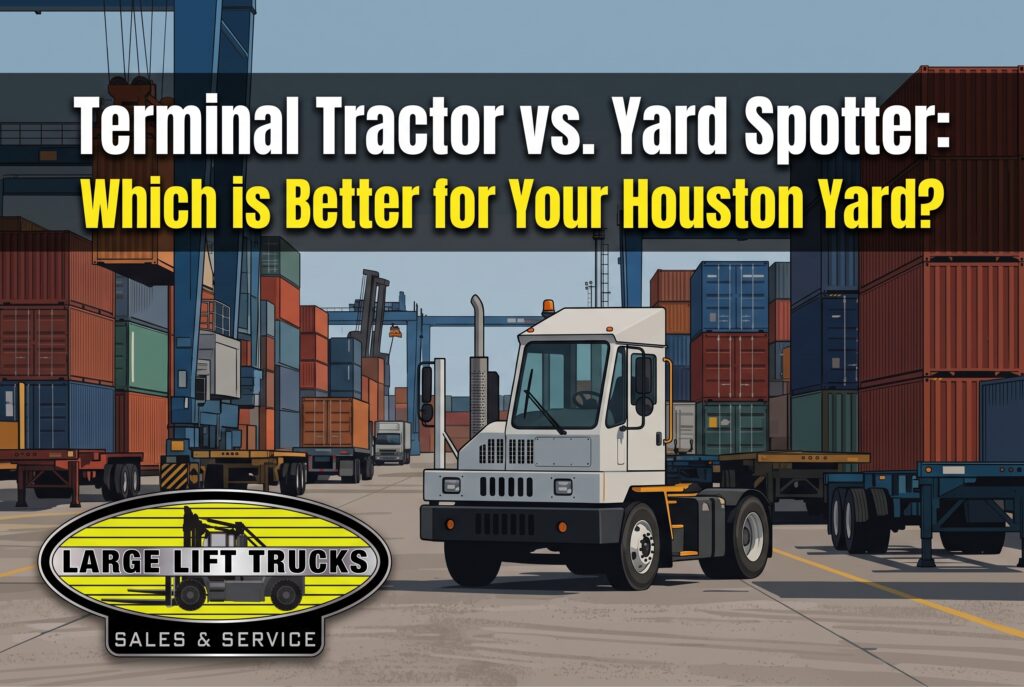
In Houston, buyers often use “yard spotter” and “terminal tractor” to mean the same thing: a compact tractor built to move trailers around a yard. Usually, that’s close enough to start a conversation, but not enough to choose the right machine.
The important distinction is less about the name and more about the configuration. Is the tractor intended to work only off-road, or must it also travel on public roads? Does it have a hydraulic fifth wheel? Where is the cab and operator positioned? Those details affect cost, visibility, compliance and how well the unit fits your operation.
First, what do the terms mean?
A yard spotter is a common name for a tractor that moves trailers between loading docks, parking areas and staging lanes. Terminal tractor and yard truck are also widely used names for this equipment. In many sales listings, they refer to essentially the same type of machine.
What the label alone does not tell you is whether the unit is road legal. An off-road yard tractor may be ideal for moving trailers inside a private facility but not suitable for public streets. A road-capable terminal tractor is configured for that additional duty and must meet applicable requirements. Always verify the specific unit’s documentation and intended use rather than relying on the listing name.
A hydraulic fifth wheel is common on these machines. It raises and lowers the trailer connection, allowing an operator to couple and uncouple without repeatedly leaving the cab. But fifth-wheel type, height and capacity vary, so confirm they suit your trailers and dock setup.

Cab layout and driving position: check the actual machine
Yard tractors are generally designed for frequent short moves, good visibility and tight turns. Many use a cab-forward layout, placing the operator closer to the front of the machine than in a conventional highway tractor. That can help with spotting trailers and maneuvering in a busy yard.
However, “front-driving” and “rear-driving” are not dependable categories on their own. Sellers may use those phrases differently, and cab position varies by model. Inspect the machine and ask where the operator sits relative to the front axle, how clearly they can see the fifth wheel and trailer, and whether the cab works for your dock and yard layout.
For Houston operations, it is worth checking HVAC performance, window visibility, step height, seat comfort and ease of entry. Operators may make many short trips in a shift, and cab comfort can affect day-to-day usability.
Which configuration suits your Houston operation?
The right choice depends on where the tractor travels and how often it moves trailers.
- Port of Houston drayage and inter-facility moves: If the unit must use public streets, prioritize a road-capable configuration and confirm its road-use status, registration requirements and equipment. Port-related work can also mean high utilization and frequent coupling cycles.
- Distribution centers and rail ramps: For repeated moves within a private site, an off-road yard spotter may be a practical fit. Turning space, trailer volume and dock placement should guide the choice.
- Container yards: Confirm fifth-wheel compatibility, frame and axle ratings, and the unit’s approved combined weight. A yard tractor moves trailers; it does not replace a container handler or other equipment designed to lift containers.
- Cold storage: Look closely at cab sealing, heating and cooling, visibility in changing conditions, and maintenance support. A machine moving between indoor and outdoor areas needs to suit that routine.
- Construction and industrial plants: Uneven surfaces, dust, tight routes and varied trailer types can make ground clearance, traction, durability and service access especially important.
Large Lift Trucks lists used yard spotter trucks and new Hoist terminal tractors. Availability changes, so confirm current options and specifications before making a decision.

Straight comparison
| Consideration | Off-road yard spotter | Road-capable terminal tractor |
|---|---|---|
| Main use | Repeated trailer moves on private property | Yard work plus permitted public-road travel |
| Fifth wheel | Often hydraulic; verify type and ratings | Often hydraulic; verify type and ratings |
| Road equipment | May not be equipped or approved for road use | Configured for road use; verify documentation |
| Best fit | Distribution yards, plants and private terminals | Port-related or inter-site moves involving public roads |
| Tradeoff | Not a substitute for a road tractor | Added road-use requirements and potentially higher cost |
Neither configuration is automatically better. A public-road package can be unnecessary expense if a tractor stays inside a closed yard. Conversely, choosing an off-road unit for a route that includes public streets can create compliance and operational problems.
Capacity and power: match the duty, not the label
When comparing units, ask for the gross combined weight rating (GCWR) and relevant axle ratings. GCWR refers to the approved combined weight of tractor and trailer; it is not the same as a forklift’s lifting capacity. The correct rating depends on the trailers, loads, route and operating conditions.
You may encounter diesel, electric, CNG and LNG options, depending on the manufacturer and model:
- Diesel is familiar and often practical where fast refueling and established service support matter. Fuel use, emissions requirements and maintenance should be part of the operating-cost comparison.
- Electric can suit a predictable, high-use yard with charging access and a duty cycle that fits the battery. Before buying, check usable battery capacity, charging time, charger installation needs and performance during your actual shifts. Port Houston has reported adding an electric terminal tractor to its fleet; see Kalmar’s report.
- CNG or LNG may be worth considering when fuel supply and fueling infrastructure are already practical for your operation. Confirm local availability, fueling logistics, tank packaging and service support before comparing projected savings.
No powertrain choice works equally well for every yard. Houston’s heat and humidity make cooling-system condition and cab air conditioning important. Salt air near the coast can accelerate corrosion, so inspect the frame, electrical connections, fasteners and underbody, and follow a suitable cleaning and maintenance schedule.

When does used make more sense than new?
A used yard spotter may be the sensible option when the budget is limited, the application is straightforward or the expected annual hours do not justify a new unit. It can also help an operation add capacity without committing to a higher purchase price.
The tradeoff is that condition matters. Ask for service records and inspect the engine or battery system, transmission, brakes, tires, fifth-wheel mechanism, hydraulics and cab. Check for corrosion and signs of hard use, and make sure any road-use claims are supported by documentation. A lower upfront price is less useful if the unit needs major repairs or cannot meet your duty cycle.
A new tractor can make more sense when uptime, warranty coverage, a specific powertrain or a defined equipment configuration is a priority. Compare total cost of ownership, not just the purchase price, and consider whether financing options or renting a forklift in Houston would better fit your near-term needs.
Questions to ask before you buy
Use this checklist when comparing a terminal tractor for sale:
- Will it stay on private property, or must it travel on public roads?
- Is the unit documented and equipped for the intended road use?
- What are its GCWR, axle ratings and fifth-wheel specifications?
- Does the fifth-wheel height and hydraulic setup match your trailers?
- Where is the cab and operator positioned, and what can they see?
- What are the actual hours, maintenance records and repair history?
- Is the powertrain suited to your shifts, fuel access and charging capacity?
- How will heat, humidity, rain and possible coastal corrosion affect maintenance?
- Can local technicians support the make and model, and are parts available?
- Would a used unit, rental or new purchase best match your expected workload?
FAQs
Are a terminal tractor and a yard spotter the same thing?
Often, yes. The names are commonly used interchangeably. The more useful questions are whether the tractor is off-road or road-capable, and whether its configuration fits your work.
Can an off-road yard spotter drive on Houston streets?
Do not assume it can. Verify the specific unit’s road-use certification, equipment and applicable registration requirements before taking it on public roads.
Is electric a good choice for a Houston yard?
It can be, especially when the work is predictable and the site can support charging. Confirm the battery range and charging plan against your actual trailer volume, shift length and Houston operating conditions.
Where can I find forklifts in Houston, TX, as well as yard equipment?
Large Lift Trucks offers forklift sales in Houston and a range of material-handling equipment. If you need help comparing equipment, you can contact the Houston team or call (713) 670-8700. You can also ask about equipment service and parts to plan for ongoing support.
If you’re weighing a terminal tractor for sale against a yard spotter for a Texas operation, start with your routes, trailers and daily workload. Then compare the actual unit specifications, not just the name. Reach out to Large Lift Trucks to discuss available equipment, request a quote or explore rental options for your Houston yard.