
Heavy-Duty Forklifts for Sale: How to Shop the 50,000–100,000 lb Class

When a load weighs 50,000 pounds or more, choosing a forklift takes more than matching the load’s weight to a number in a listing. Load length, center of gravity, lift height, attachment, ground conditions and duty cycle all affect which truck can handle the job safely.
For Houston steel yards, ports, concrete producers and heavy industrial operators, this guide explains what to consider when shopping for a forklift in the 50,000–100,000 lb class, and what to check before buying a used unit.
What counts as a heavy-duty forklift?
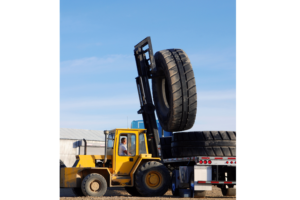
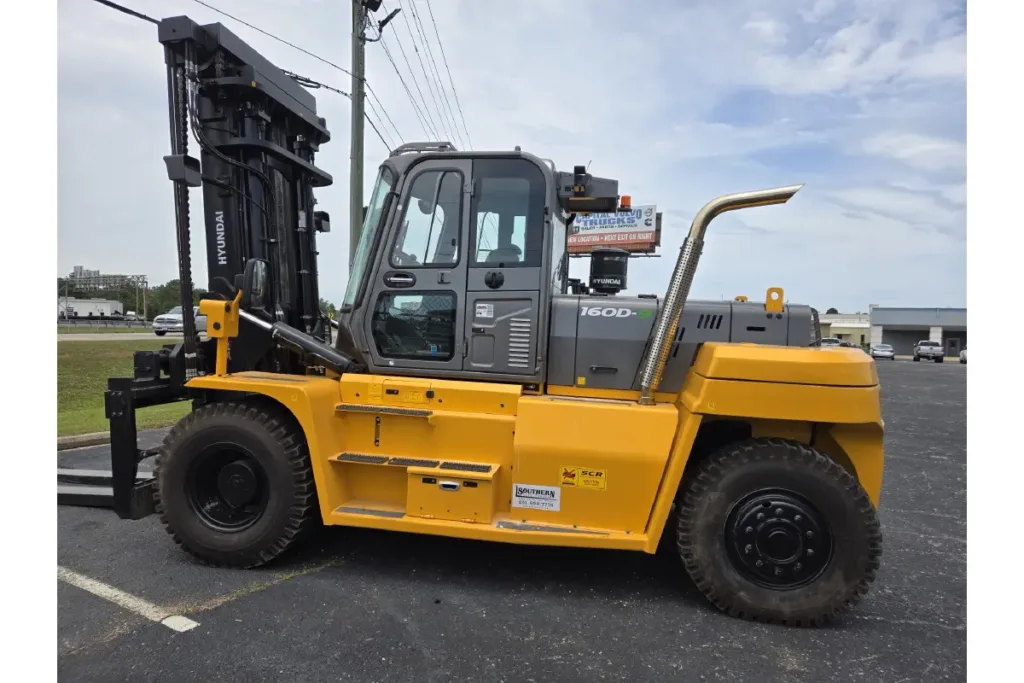
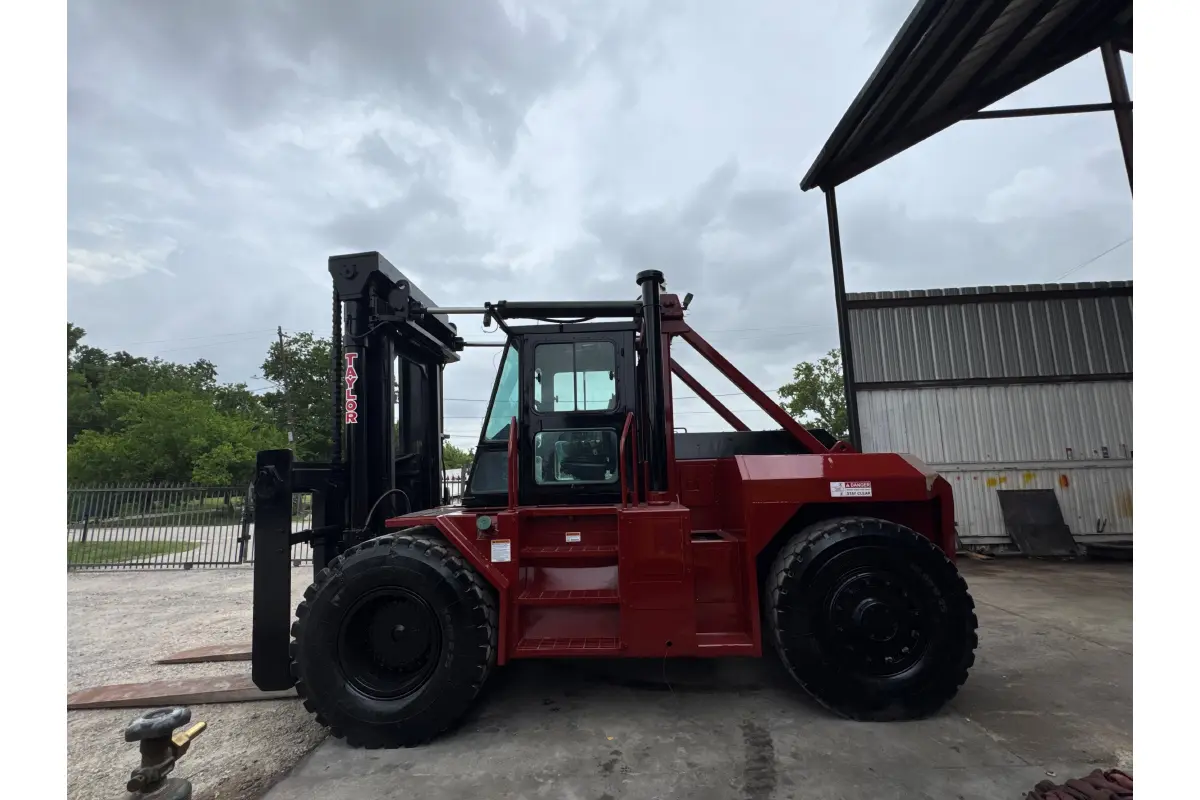
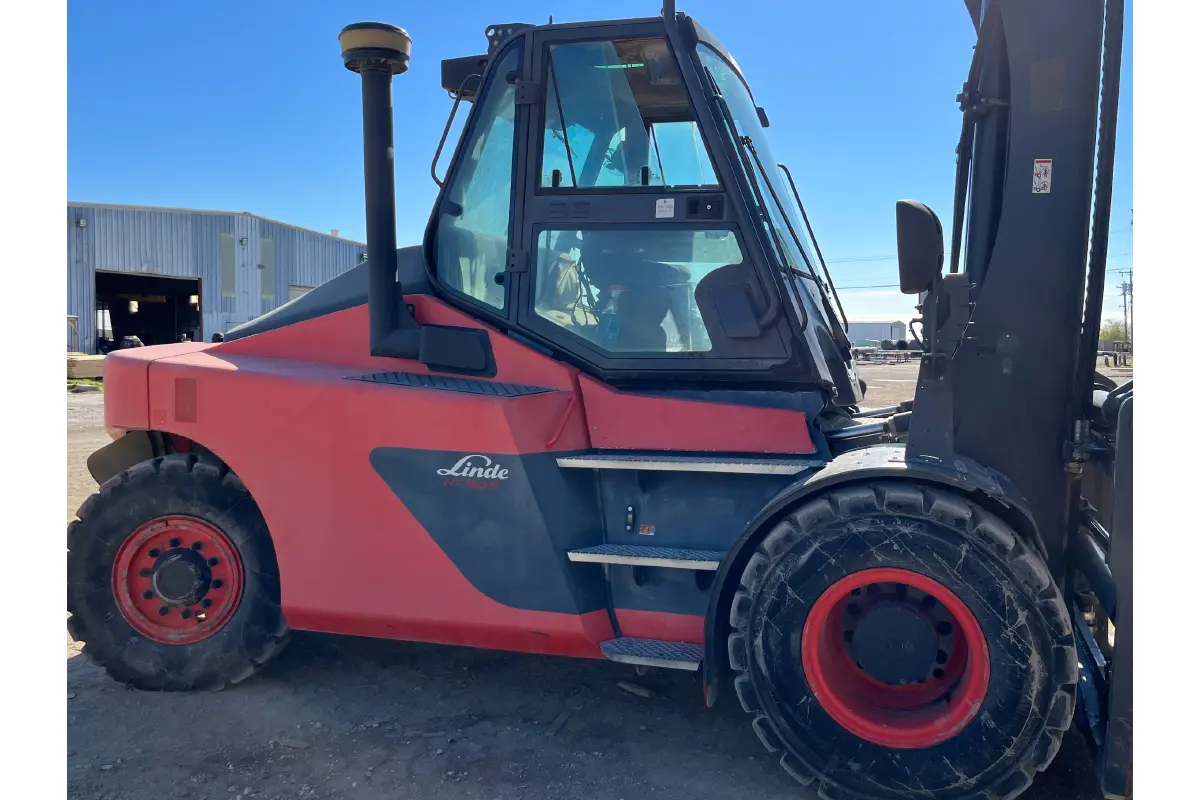
These are specialized industrial forklift trucks, typically built with a reinforced frame, heavy mast and carriage, large pneumatic tires and a high-power diesel or other internal-combustion engine. Some models are configured for indoor steel or forging work, but pneumatic tires are common for outdoor yards and uneven surfaces.
A capacity rating is tied to a specific setup. For example, Hyster’s H550–H700XD series includes models rated from 55,000 to 70,000 pounds at specified 36- or 48-inch load centers. Its H800–H1050XD family covers 80,000 to 105,800 pounds at a 48-inch load center. Those figures are not universal ratings for every load or attachment.
The load center is the distance from the fork face to the load’s center of gravity. If the load is longer or its weight sits farther forward than the truck’s rated configuration assumes, the truck’s allowable capacity may be lower. Lift height, mast and carriage configuration, forks and attachments also affect the capacity available for a particular job.
Before you shop, identify the actual load weight and dimensions, where its center of gravity sits, how high it must be lifted, and what attachment the job requires. Then confirm the truck’s capacity for that exact configuration.
Where these trucks work in Houston and Texas
Large forklift trucks are used when the loads and conditions exceed the reach of standard warehouse equipment. Common applications include:
- Steel and pipe yards: moving coils, billets, plate, structural steel and long pipe.
- Concrete and precast operations: handling heavy forms and finished products.
- Ports and intermodal yards: moving containers and breakbulk cargo.
- Heavy fabrication: positioning machinery, large assemblies and energy-sector components.
- Oilfield and construction operations: handling oversized materials in demanding yard conditions.
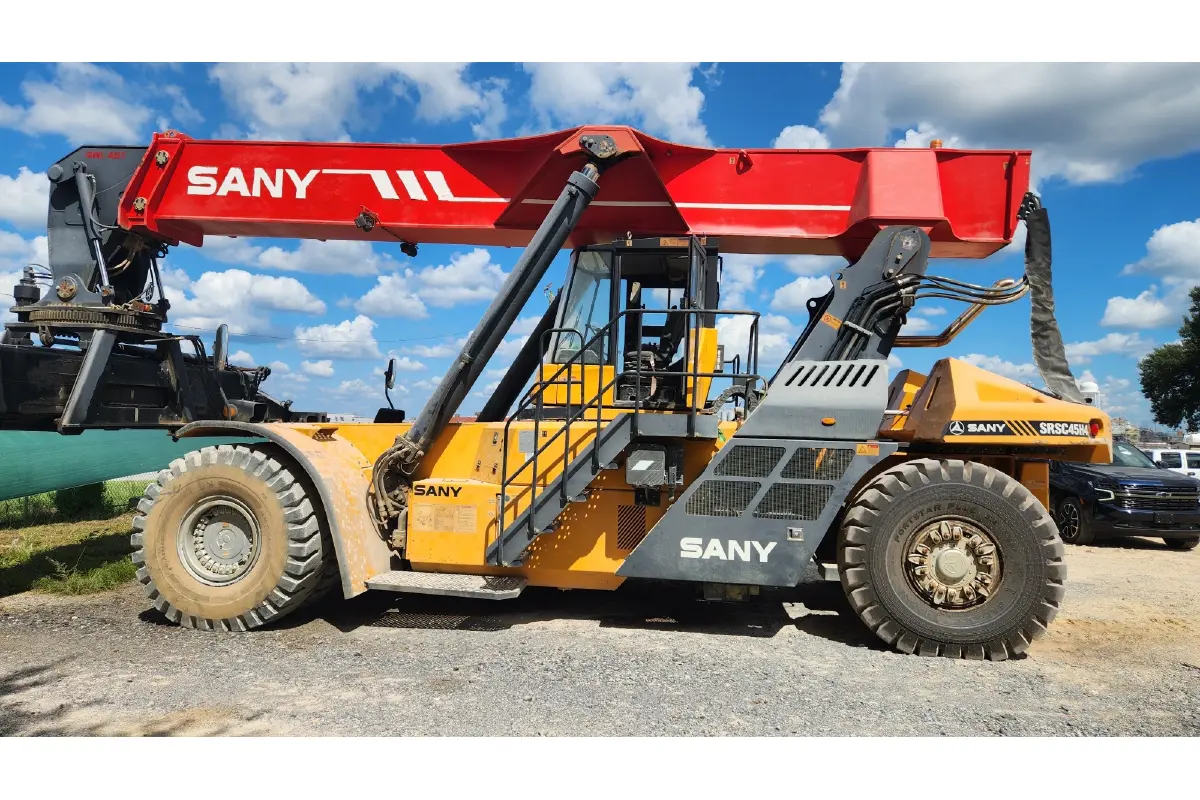
Some jobs may call for a purpose-built container handler rather than a conventional forklift with forks. The right equipment depends on the load and handling process.
Compare capacity classes and typical applications
| Approximate rated capacity | Typical application | What to confirm |
|---|---|---|
| 30,000–50,000 lb | Heavy fabrication, pipe and steel yards | Load length, load center, surface and attachment |
| 50,000–70,000 lb | Steel, mining, energy and breakbulk work | Required capacity at the actual load center and lift height |
| 80,000–100,000 lb | Extreme heavy loads, large components and some port work | Truck configuration, residual capacity, route and site conditions |
These ranges are a starting point, not a selection rule. A long or irregular load can require a higher-rated truck than its weight alone suggests. Likewise, a specialized attachment can change capacity and visibility. Ask for the capacity information for the complete truck-and-attachment configuration; do not rely on the truck’s headline rating alone.
Brands and configurations to consider
Hoist, Taylor, Hyster and Caterpillar are among the names buyers may encounter when shopping this class. Availability, specifications and support differ by model and configuration, so compare the individual truck rather than assuming that brand or model name tells the whole story.
Hoist’s P-Series, for example, is listed with a capacity range of 30,000–125,000 pounds and load centers from 24 to 48 inches. Its configurations can include different mast and carriage options and attachments for specific materials. Hyster’s heavy-capacity XD lines include models in and above the 50,000–100,000 lb range. Taylor is another manufacturer known for high-capacity industrial equipment.
If you are considering a Caterpillar or other used machine, verify its exact rating using the truck’s data plate, serial-number-specific records and appropriate capacity information. Model names and nominal ratings alone are not enough to confirm suitability.
New versus used: budget for the whole purchase
A new 50,000-pound forklift may fall in a broad planning range of about $400,000–$650,000, while a new truck near 100,000 pounds may reach $800,000–$1.2 million or more. Used heavy-duty units can range from tens of thousands to several hundred thousand dollars. These are rough budgeting figures, not quotes; condition, year, hours, mast, attachments, configuration and availability can change the price significantly.
For used forklifts for sale in Texas, compare more than the asking price. Include inspection, freight, rigging, repairs, required attachments and commissioning in your budget. A lower-priced unit may need major work before it can return to production.
Explore used forklift inventory, new Hoist forklifts, or ask about financing to compare purchase options.
Shopping for a large forklift for sale in Houston? Share the load weight and dimensions, lift height, attachment, work environment and expected hours with our team. That information makes it easier to narrow down suitable equipment and identify what needs to be verified before a purchase.
Used heavy-duty forklift inspection checklist
At this capacity, a careful inspection is essential. A qualified heavy-equipment technician should assess the machine before purchase, including:
- Identity and records: Match the serial number, model, data plate and service history. Confirm the plate is legible and reflects the current truck configuration.
- Hydraulics and cylinders: Check pumps, valves, hoses, fittings and cylinder rods for leaks, damage, corrosion and abnormal operation.
- Mast, chains and carriage: Look for cracks, bending, uneven wear, damaged rollers and chain wear. Check forks and fork heels for damage and wear.
- Frame, welds and counterweight: Inspect structural areas for cracks, repairs, impact damage or signs of prior overloading.
- Tires, wheels and axles: Confirm the tires are appropriate and rated for the application. Inspect rims, wheel hardware, drive axle and steering axle.
- Brakes and steering: Test service and parking brakes, steering response and related systems under a controlled inspection.
- Hours and duty cycle: Compare meter readings with maintenance records and component condition. Low indicated hours do not prove light use.
- Attachments and capacity information: Verify the attachment is secure, compatible with the truck and accounted for in the truck’s capacity information.
- Operating test: Have a qualified technician check lifting, tilting, hydraulic drift, braking and drivetrain operation using an appropriate procedure.
OSHA notes that attachments can affect a forklift’s capacity and center of gravity. The truck’s capacity information should reflect the applicable configuration, and operators need to be trained for the equipment they use. See OSHA’s guidance on powered industrial truck attachments.
Service, parts and Houston’s Gulf Coast conditions
For a truck in this class, parts availability and qualified service support are part of the buying decision. Downtime can interrupt production or yard operations, and repairs may involve heavy-duty hydraulics, brakes, mast components or drivetrain systems.
Large Lift Trucks provides service for trucks up to 100,000 pounds, and its mechanics average more than 25 years of heavy-equipment experience. Learn about forklift service and repair and parts support when comparing a candidate machine’s long-term support needs.
Houston’s humidity and coastal exposure can also speed corrosion, especially on exposed metal, electrical connections, mast components and hydraulic-cylinder surfaces. For equipment working or stored near salt air:
- Store the truck under cover when practical and avoid leaving it in standing water.
- Clean off salt and grime, then dry exposed surfaces after outdoor use.
- Follow the manufacturer’s lubrication and inspection schedule.
- Check chains, mast rails, cylinder rods, wiring, fasteners and frame welds regularly.
- Increase inspection frequency after prolonged exposure to moisture or salt.
These steps are especially relevant for a used unit whose maintenance and storage history is incomplete.
FAQs
Is a 50,000-pound forklift suitable for every 50,000-pound load?
No. The rated capacity depends on the load center, lift height, mast and attachment configuration. Confirm capacity for the specific load and operating setup.
Do attachments reduce forklift capacity?
They can. An attachment changes the truck’s weight distribution and may change the load center and visibility. Request the capacity information for the complete configuration.
Should I buy new or used?
A new truck may suit operations that need a specific configuration, predictable condition or longer planned service life. A used truck may cost less up front, but its inspection, repair and transport costs should be included in the comparison.
What should I provide when requesting a quote?
Share the load’s weight and dimensions, center of gravity if known, lift height, required attachment, surface conditions, duty cycle and delivery location.
If you’re evaluating a heavy duty forklift for sale in Houston or elsewhere in Texas, contact Large Lift Trucks for a quote. You can also review used inventory, ask about new Hoist equipment, or request service guidance before making a decision.