
Looking For a Yard Spotter? Here Are 10 Things You Should Know Before You Buy

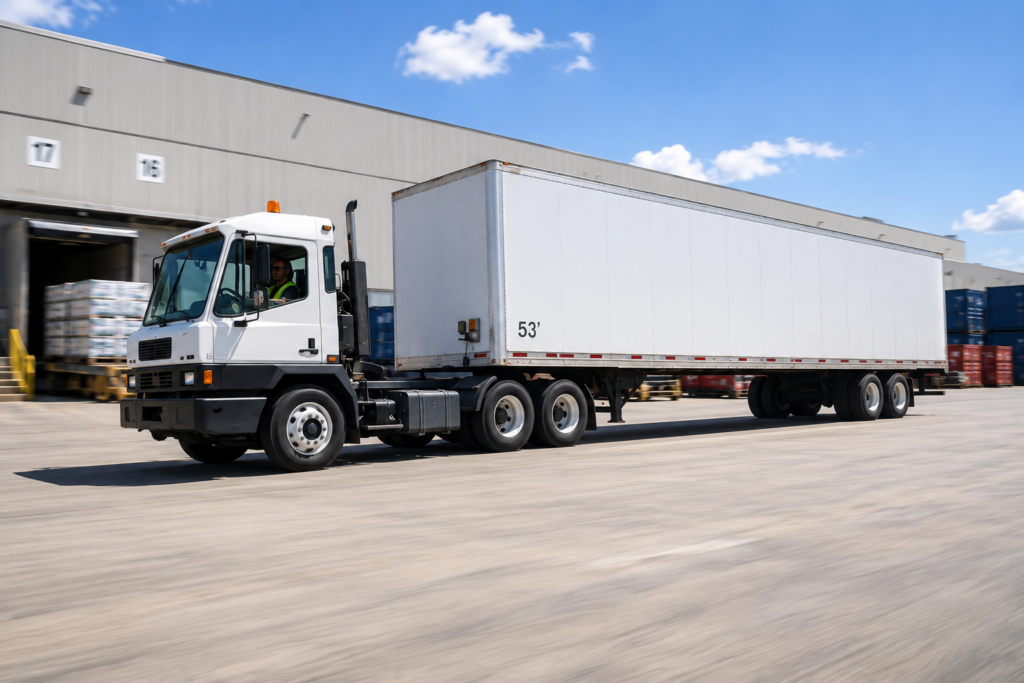
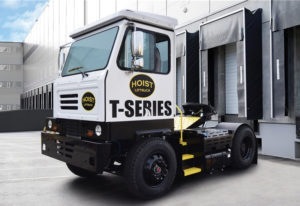
If you are managing a busy distribution center or a port terminal in Houston, Texas, you already know that efficiency is the name of the game. When your operations grow to a certain point, a standard semi-truck just won’t cut it for moving trailers around the yard. That is where the yard spotter: also known as a terminal tractor or yard jockey: comes into play.
These machines are built for one purpose: moving trailers quickly and safely over short distances. However, purchasing one is a significant investment. You want to make sure you are getting a piece of equipment that will stand up to the rigorous Texas heat and the heavy workloads of your specific industry. To help you navigate this process, we have compiled a comprehensive guide on the 10 things you need to know before you sign on the dotted line.
1. Know Your Acreage and Space Requirements
The first step in your journey isn’t looking at the truck, but looking at your yard. The physical layout of your facility in Houston will dictate the type of yard spotter you need. Yard spotters are prized for their tight turning radius, which is significantly better than a standard over-the-road (OTR) tractor.
If your yard is cramped with narrow aisles and tight corners, you need to prioritize maneuverability. On the other hand, if you are operating across a massive acreage with long distances between gates and loading docks, you might prioritize speed and fuel efficiency over the absolute tightest turning circle. Knowing the smallest space your driver will need to navigate helps ensure you don’t buy a machine that is literally too big for the job.
2. Clarify Your Specific Operational Needs
Why exactly are you looking for a yard spotter? While their primary job is moving trailers, these machines are versatile. In the material handling world, we see them used for everything from grading and snow removal (though less common in Texas!) to moving heavy hay or industrial materials.
Are you moving empty containers, or are you pulling 53-foot trailers loaded with heavy machinery? Your operational needs will determine the specifications. For instance, if you are working in a port environment, your requirements for corrosion resistance and lifting power might be higher than those of a grocery distribution center. You can learn more about the basic functions in our article on exactly what a terminal tractor is anyway.
3. Rank Your Work Priorities
It is rare to find a single machine that is the “best” at every single category. You need to decide what matters most for your Houston-based operations. We recommend ranking these three factors:
- Lift Capacity: How much weight can the fifth wheel handle?
- Horsepower: Do you need high speeds across a large lot, or just raw pulling power?
- Hydraulic Capacity: How fast do you need the fifth wheel to raise and lower?
When you talk to a sales representative, providing this ranked list allows them to point you toward the model that hits your “must-haves” without overcharging you for features you don’t need.

4. Set a Comprehensive Budget
When we talk about budget, we aren’t just talking about the sticker price. A straightforward approach to buying equipment requires looking at the Total Cost of Ownership (TCO). In the Texas climate, your budget needs to account for:
- Fuel Costs: Yard spotters idle a lot; look for fuel-efficient engines.
- Maintenance: Regular oil changes, hydraulic fluid checks, and tire rotations.
- Storage and Security: Do you have a place to keep the unit when not in use?
- Repairs: Especially for the engine and transmission, which take the brunt of the work.
If the upfront cost of a new unit is too high, you might want to look at a new and used forklift price guide to get a sense of how material handling equipment is valued, or consider how to find a high-quality used forklift which often follows similar logic to finding used yard trucks.
5. Assess Safety Features
Safety is paramount in any industrial setting. A yard spotter is a powerful machine operating in close proximity to ground personnel and other vehicles. When inspecting a potential purchase, look for:
- 360-Degree Visibility: The cab should have large windows and minimal blind spots.
- Backup Alarms and Lighting: Essential for night shifts and busy docks.
- Anti-Collision Systems: Newer models often feature sensors to prevent accidents.
- Ergonomics: A comfortable driver is a safe driver. Ensure the seat belts and protective cabin designs meet current safety standards.
For more on general site safety, check out our 7 safety tips for operating forklifts, as many of these principles apply directly to yard spotter operation.

6. Inspect Frame and Chassis Integrity
If you are looking at a used yard spotter, you must get under the vehicle. The frame is the backbone of the truck. In the humid environment of Houston, Texas, rust can be a significant issue. Look for “layered” rust or ripples in the welds. These are red flags indicating the chassis has been under extreme stress or has been compromised by corrosion.
Another critical check is the fifth-wheel release. Test it both while loaded and empty. If the mechanism sticks or requires excessive force, it could lead to mechanical failures or operator injury down the road. You can find more details in our buyers checklist for yard spotter trucks.
7. Review Vehicle History and Maintenance Records
Never buy a piece of equipment without seeing its “papers.” A reputable seller should be able to provide a complete history of the vehicle. This includes:
- Regular maintenance logs (oil and filter changes).
- Accident reports or major repair records.
- Verification of the engine plate against the OEM database.
Knowing the history allows you to sleep in peace knowing you aren’t inheriting someone else’s mechanical nightmares. If the seller is vague about the truck’s past, it is usually best to walk away.
8. Distinguish Between Necessities and Nice-to-Haves
It is easy to get distracted by shiny new tech. However, for a straightforward business operation, you need to focus on what keeps the trailers moving. Create two columns: one for “Must-Haves” and one for “Nice-to-Haves.”
For example, a high-end stereo system might be a “nice-to-have,” but a reinforced rear sliding door is a “necessity” for an operator who gets in and out of the cab 50 times a day. By focusing on utility, you can often save thousands of dollars on the final price.

9. Consider Additional Features Based on Your Climate
Living and working in Texas means dealing with extreme heat. In Houston, summer temperatures can make a cab feel like an oven. For our region, we highly recommend investing in a high-quality heating and cooling system.
Climate control isn’t just a luxury; it is a productivity tool. An overheated driver is more likely to make mistakes or require more frequent breaks. Also, consider the transmission type. If your yard involves slight inclines or heavy loads, an automatic transmission designed for high-cycle environments is usually the best choice for longevity.
10. Take a Test Drive
You wouldn’t buy a car without driving it, and you shouldn’t buy a yard spotter without a test run. Even if the specs look perfect on paper, the “feel” of the machine matters.
Have your most experienced yard jockey take it for a spin. They will notice things a manager might miss: the responsiveness of the steering, the noise levels in the cab, and how smoothly the hydraulics engage. A test drive is the final filter to ensure the equipment is truly ready for work.

Should You Buy or Rent?
Sometimes, purchasing isn’t the right move. If you have a seasonal surge in business or a short-term project, you might find that renting a forklift or a yard spotter is more cost-effective.
Renting allows you to avoid the long-term maintenance costs and capital expenditure of a full purchase. For many Houston businesses, this flexibility is a win-win situation. If you are debating between the two, read our guide on whether you should buy or rent.
Frequently Asked Questions
What is the average lifespan of a yard spotter?
With proper maintenance, a quality yard spotter can last 10 to 15 years, or roughly 20,000 to 30,000 hours of operation.
Do I need a CDL to drive a yard spotter in Texas?
If the vehicle is operated strictly on private property (off-road), a CDL is generally not required. However, if the spotter needs to cross or travel on public roads, the driver must have a valid CDL.
How often should I service my yard truck?
We recommend a basic inspection every 250 hours and a major service every 1,000 hours, especially considering the dust and heat typical of Houston industrial areas.
Ready to Find Your Next Yard Spotter?
Choosing the right equipment is about more than just a low price; it’s about finding a partner in your operational success. At Large Lift Trucks, Inc., we provide straightforward advice and high-quality equipment to businesses across Texas.
- Explore our inventory: Check out our showrooms to see what we have in stock.
- Get expert advice: Contact our sales reps today to discuss your specific yard requirements.
- Learn more: Watch our equipment in action on our videos page.
Whether you are looking to buy new, buy used, or find a reliable forklift rental in Houston, we are here to help you move forward. Contact your local material handling experts today and find out how we can keep your yard running at peak efficiency.