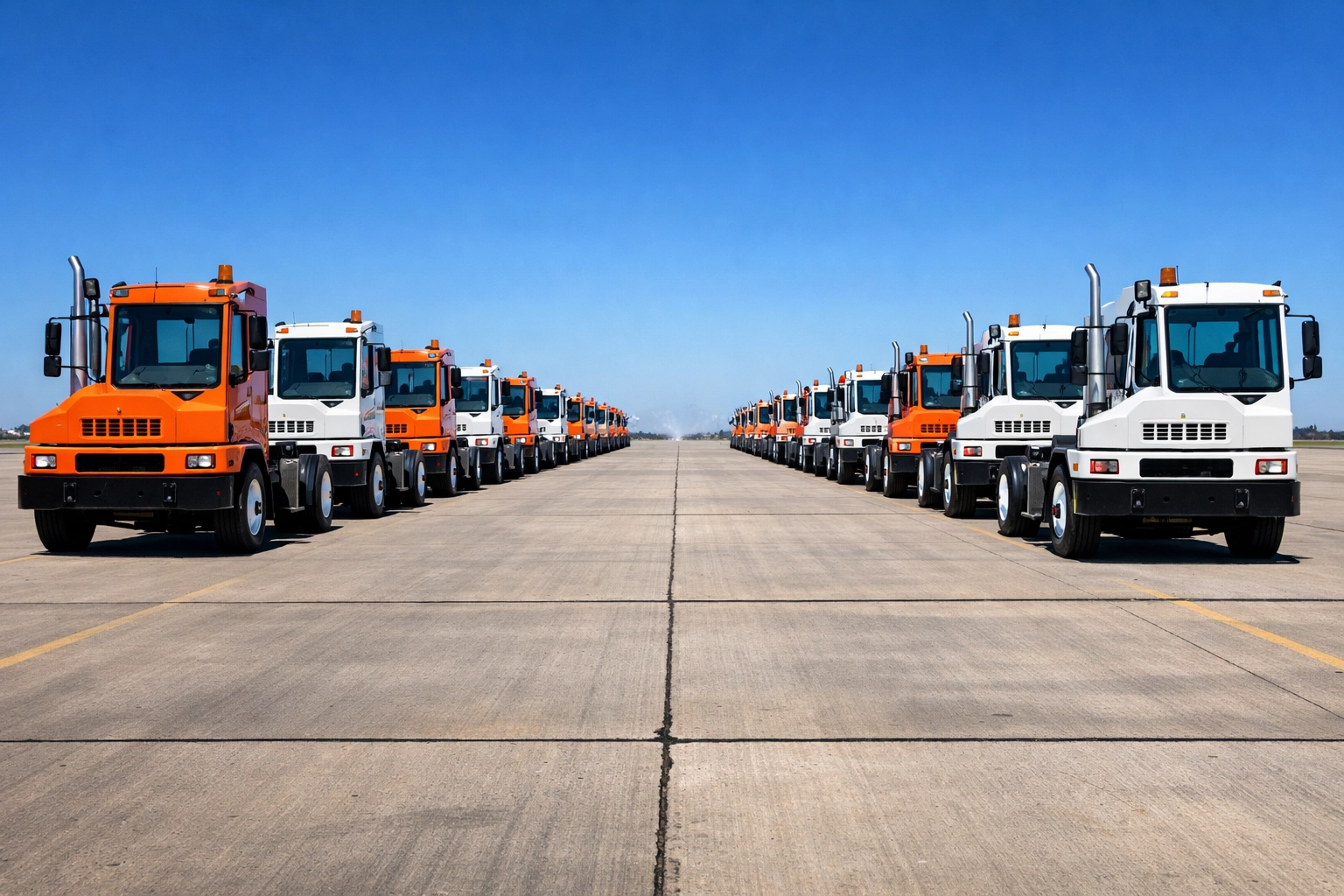
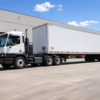
If you operate a distribution center, a busy port terminal, or a manufacturing plant in the Houston area, you know that efficiency in the yard is just as important as efficiency on the highway. Moving trailers quickly and safely is the name of the game. When it comes to the equipment doing the heavy lifting, the conversation usually centers around one specific machine: the yard spotter.
Also known as a terminal tractor, yard dog, or yard goat, these specialized vehicles are the backbone of logistics. But as technology shifts, fleet managers across Texas are facing a tough question: Should you stick with the tried-and-true diesel engine, or is it time to plug into the electric revolution?
At Large Lift Trucks, Inc., we see both sides of the coin every day. Whether you are looking for new equipment or considering forklifts in Houston TX, choosing the right power source for your yard operations is a decision that impacts your bottom line for years to come. Let’s break down the pros and cons of electric versus diesel yard spotters specifically for the Houston market.
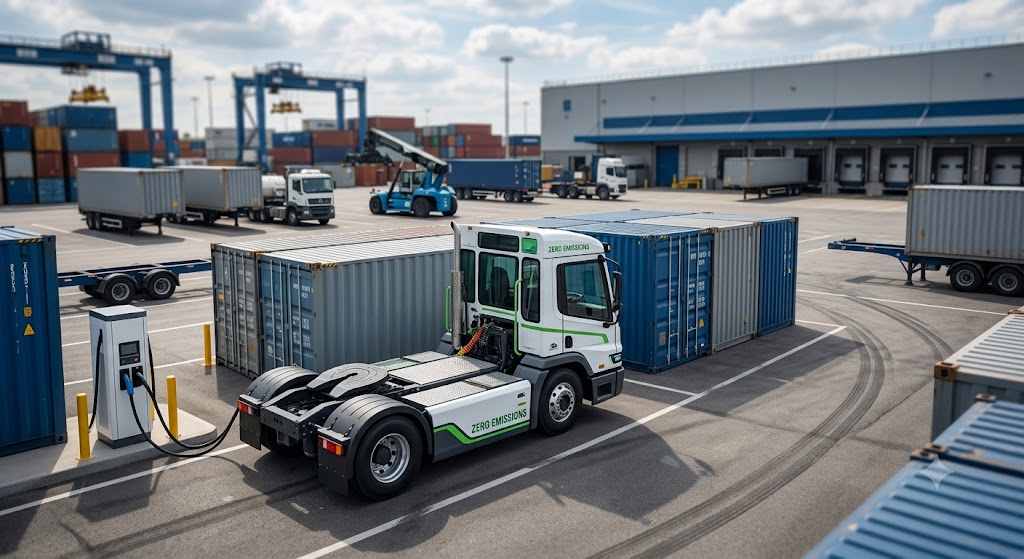
Before we dive into the fuel types, it is helpful to clarify exactly what these machines do. A yard spotter is designed to move semi-trailers within a cargo yard, warehouse facility, or intermodal terminal. Unlike a standard over-the-road truck, a terminal tractor features a hydraulic lifting 5th wheel, allowing the driver to move trailers without cranking the landing gear up and down manually.
If you are new to this equipment, you might want to read our guide on exactly what a terminal tractor is anyway to get up to speed.
The Cost Equation: Upfront Investment vs. Long-Term ROI
In business, everything eventually comes down to the numbers. If you are comparing electric and diesel, the “sticker shock” is usually the first hurdle.
Diesel: The Economical Entry
Diesel yard spotters have a much lower initial purchase price. For many Houston businesses, especially those just starting out or managing tight capital expenditure budgets, diesel is the accessible choice. There is also a robust market for used diesel units, making it easier to find a high-quality used forklift or tractor for sale in Houston.
Electric: The Efficiency Powerhouse
Electric yard spotters often cost nearly double the price of their diesel counterparts upfront. However, you can rest assured that the long-term savings are where the electric model shines. Because electric motors are significantly more efficient, up to 5 to 7 times more efficient than diesel in low-speed, stop-and-start environments, the fuel savings are massive.
In a typical Houston industrial setting, a yard spotter spends a lot of time idling. Diesel engines waste fuel and accumulate engine hours while sitting still. Electric motors, on the other hand, consume virtually zero energy when the vehicle isn’t moving. Studies have shown that over a six-year period, an electric truck can save over $150,000 in energy and maintenance costs compared to diesel.
Maintenance Requirements: Simple vs. Complex
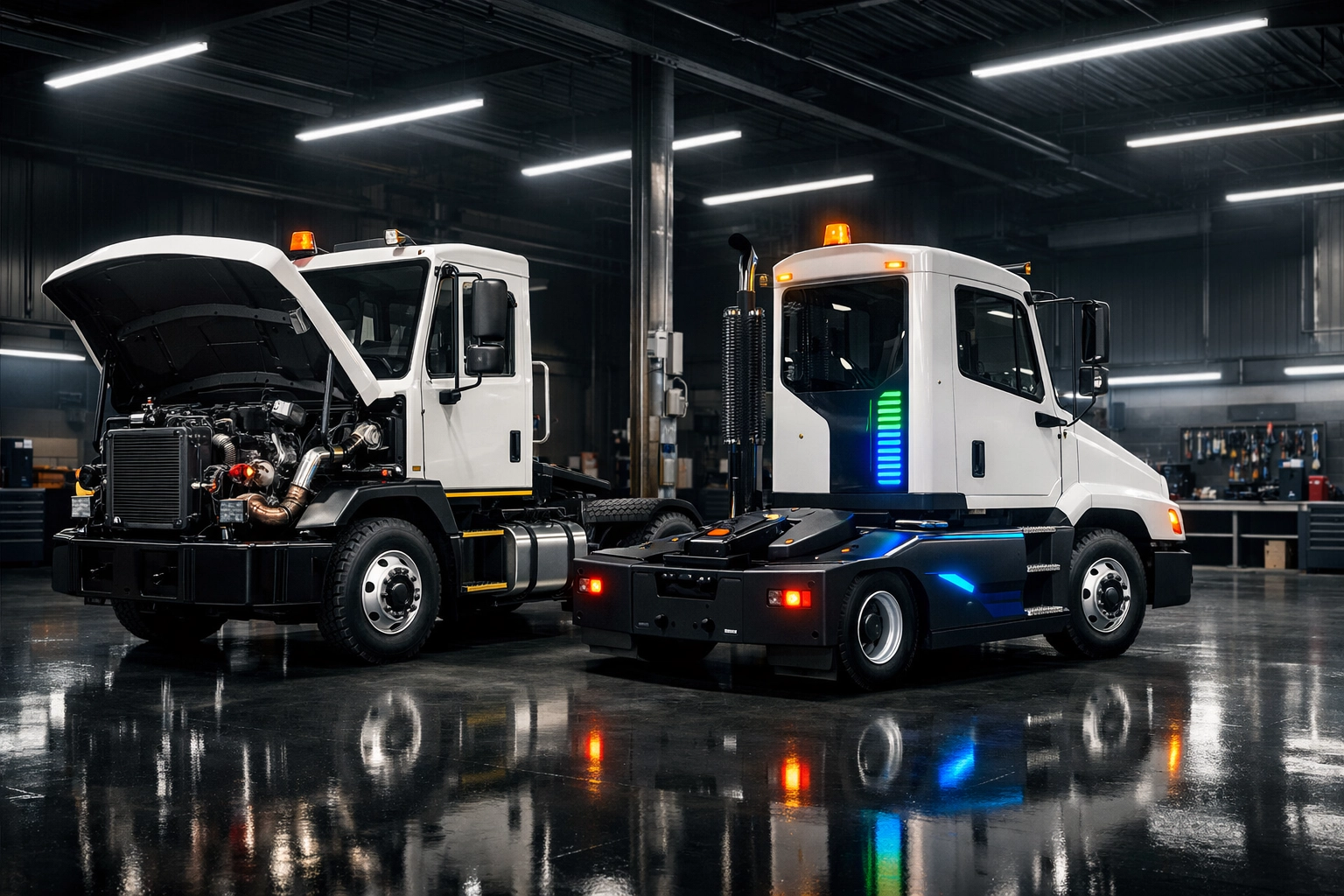
Maintenance is where the two types of yard spotters diverge most sharply. If you’ve ever managed a fleet of diesel trucks in the Texas heat, you know that cooling systems, exhaust after-treatment (DPF), and oil changes are a constant source of downtime.
Diesel Maintenance
A diesel terminal tractor is a complex machine. You have an internal combustion engine with hundreds of moving parts, a cooling system that has to fight the 100-degree Houston humidity, and complex emissions systems that require regular regeneration cycles. If a DPF filter clogs or a turbocharger fails, your yard comes to a standstill.
Electric Maintenance
Electric vehicles (EVs) are remarkably simple. There are no oil changes, no spark plugs, no fuel filters, and no exhaust systems to maintain. The primary maintenance involves checking the battery health and keeping the electrical connections clean. For a fleet manager, this means fewer trips to the parts department and more time moving trailers. You can sleep in peace knowing your “yard dog” doesn’t have a dozen different fluids that could leak all over your warehouse floor.
Performance in Houston’s Industrial Settings
How do these machines actually handle the work? Houston is a demanding environment. Between the heavy loads at the Port of Houston and the intense summer heat, your equipment needs to be rugged.
Torque: Electric motors provide 100% of their torque instantly. For a terminal tractor, this is a huge advantage. Pulling a 40,000-lb trailer from a dead stop is effortless with an electric powertrain.
Emissions and Air Quality: Houston often faces air quality challenges. Using electric equipment helps your company meet sustainability goals and improves the working environment for your drivers by eliminating exhaust fumes in confined warehouse bays.
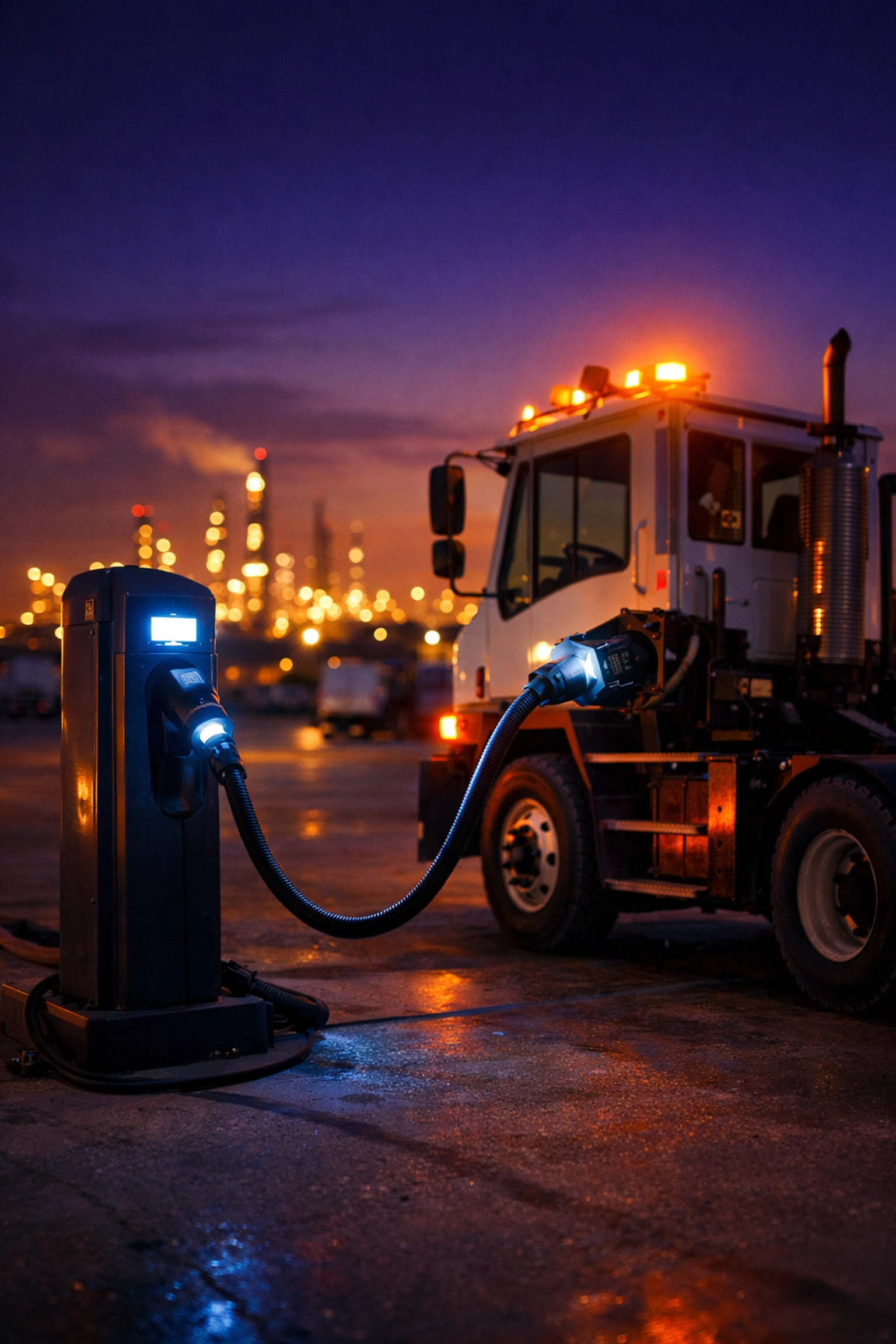
Refueling vs. Charging: Diesel is fast to refuel, which is great for 24/7 operations. Electric units require a charging infrastructure. However, many modern electric spotters support “opportunity charging,” where the driver plugs the unit in during lunch or shift breaks to keep the battery topped off.
Infrastructure and the “Houston Factor”
When deciding on a fleet upgrade in Texas, you have to consider the local infrastructure. Houston is a major hub, which means we have better access to charging installers than more rural parts of the state. However, installing high-voltage chargers for a fleet of electric yard spotters requires planning and a partnership with local utility providers.
If your facility isn’t ready for a full electric overhaul, diesel remains the “plug-and-play” solution. You can pull a diesel tractor into the yard today and have it working within minutes. If you are leaning toward diesel but want to keep costs down, you might consider how renting a forklift or spotter in Houston can save you money while you evaluate your long-term needs.
Which One Is Right For You?
So, which is better for your Houston fleet? It really depends on your operational cycle and your financial strategy.
Choose Diesel if:
You need the lowest possible upfront cost.
Your fleet runs 24/7 with very little downtime for charging.
You don’t have the electrical capacity in your facility for high-speed chargers.
You prefer a proven technology with a wide range of Caterpillar forklift parts and service technicians readily available.
Choose Electric if:
You are looking for the lowest Total Cost of Ownership (TCO) over 5+ years.
Your operation involves a lot of idling and short-distance movements.
You want to reduce your facility’s carbon footprint and improve driver comfort.
You have the capital to invest in charging infrastructure now to save on fuel later.
Now, isn’t that a win-win situation? Whether you go green or stay with diesel, upgrading your yard equipment is a sure way to boost productivity.
Call to Action
Deciding between electric and diesel is a big move. At Large Lift Trucks, Inc., we help Houston businesses navigate these choices every day. Whether you need to buy, lease, or find a forklift rental in Houston TX, our team is here to help.
1. How long does an electric yard spotter battery last on a single charge?
Most modern electric terminal tractors can handle a full 8-to-10-hour shift on a single charge, depending on the intensity of the work. With opportunity charging during breaks, many fleets run them through multiple shifts.
2. Is it hard to find service technicians for electric tractors in Houston?
While the technology is newer, the simplicity of electric motors means there is less to go wrong. At Large Lift Trucks, Inc., we are constantly updating our training to ensure our Houston-based technicians can support the latest equipment.
3. Can I test an electric yard spotter before buying?
We highly recommend trying before you buy. Renting is a great way to see how an electric unit fits into your specific workflow. Check out our checklist for a forklift rental service in Houston to get started.
4. Are there tax incentives for choosing electric in Texas?
Yes, there are often federal and state-level grants or tax credits available for businesses that switch to zero-emission equipment. We recommend consulting with your tax professional to see which “green” incentives apply to your Houston fleet.
5. What is the typical lifespan of a diesel yard spotter?
With proper maintenance and high-quality parts, a diesel yard spotter can easily last 10 to 15 years in a yard environment. However, maintenance costs usually climb significantly after the first 5-7 years.
Whether you’re moving containers at the port or managing a local warehouse, Large Lift Trucks, Inc. has the equipment and the expertise to keep your Houston operations moving forward. Reach out to us today to discuss your fleet’s future!