
Lithium-ion vs. Lead-Acid: Choosing the Right Battery for Your Forklift

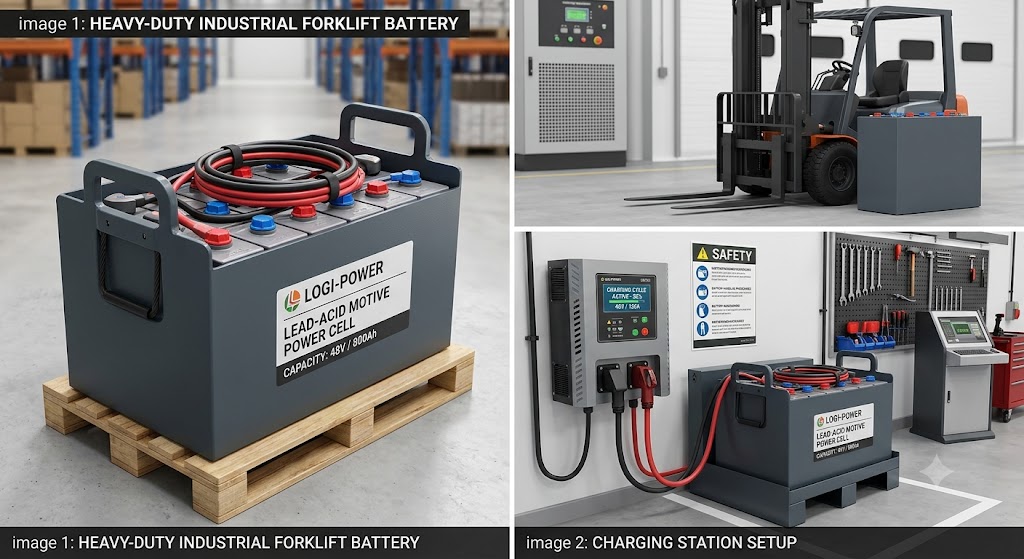
For decades, the lead-acid battery has been the undisputed king of the warehouse. It was the only viable option for powering electric forklifts in Houston and across the global supply chain. However, the rise of lithium-ion (Li-ion) technology has fundamentally changed the conversation for fleet managers in Texas.
Choosing between these two technologies isn’t just a matter of picking the cheapest option; it is a strategic decision that affects your daily uptime, maintenance schedules, and long-term profitability. At Large Lift Trucks, Inc., we see businesses across Texas grappling with this choice every day. Whether you are managing a high-volume distribution center in Houston or a small manufacturing shop, understanding the nuances of battery chemistry is essential.
The Traditional Choice: Lead-Acid Batteries
Lead-acid batteries have powered the material handling industry for over a century. Their longevity in the market is due to their reliability and, most importantly, their low initial price point. For many operations, particularly those running single shifts, lead-acid remains a practical choice.
The Pros of Lead-Acid
The primary advantage of lead-acid is the upfront cost. They are significantly less expensive than lithium-ion alternatives, often costing a third or even a quarter of the price. This makes them highly attractive to businesses with tight capital expenditure budgets. Furthermore, the technology is well-understood. Every forklift technician in Texas knows how to handle, maintain, and repair lead-acid systems.
The Challenges: Maintenance and the “8-8-8 Rule”
The downsides of lead-acid involve high operational demands. A standard lead-acid battery typically follows the “8-8-8 rule”: eight hours of use, eight hours of charging, and eight hours of cooling. If you have a multi-shift operation, this means you need at least two or three batteries per forklift, along with the equipment (like battery pullers) and the dedicated space to swap them out.
Maintenance is also a significant factor. Lead-acid batteries require “watering”, the regular addition of distilled water to maintain electrolyte levels. Failing to do this correctly can lead to “sulfation,” which permanently reduces the battery’s capacity and lifespan. Additionally, they must undergo “equalization” charges to balance the cells and prevent acid stratification.

The Modern Powerhouse: Lithium-ion Batteries
Lithium-ion technology, the same chemistry found in your smartphone and electric vehicles, has been adapted for heavy-duty material handling. While the initial investment is higher, the operational advantages are substantial for high-intensity environments.
The Benefits: Opportunity Charging and Zero Maintenance
The most transformative feature of lithium-ion is “opportunity charging.” Unlike lead-acid, which must be fully charged and cooled in long cycles, lithium-ion batteries can be plugged in during a 15-minute coffee break or a 30-minute lunch. This eliminates the need for battery swaps and dedicated charging rooms. One battery stays in the truck for the entire life of the vehicle.
Furthermore, lithium-ion batteries are virtually maintenance-free. There is no watering, no equalization, and no cleaning of acid residue. For a busy operation in Houston, this translates to hundreds of man-hours saved every year.
Performance Consistency
Lead-acid batteries experience “voltage sag” as they discharge. As the battery nears 30% or 20% capacity, the forklift becomes slower and less capable of lifting heavy loads. Lithium-ion batteries provide a constant voltage throughout the entire discharge cycle. Your forklift will perform exactly the same at 10% charge as it does at 100%.
Head-to-Head Comparison: The Data
To make an informed decision for your Texas operation, it helps to look at the numbers side-by-side.
| Feature | Lead-Acid Battery | Lithium-ion Battery |
|---|---|---|
| Upfront Cost | Low | High (2x to 4x higher) |
| Lifespan | 1,000 – 1,500 cycles | 2,000 – 3,000+ cycles |
| Charging Time | 8 hours (+ 8 hours cooling) | 1 – 2 hours (no cooling needed) |
| Maintenance | Weekly watering & cleaning | Zero maintenance |
| Energy Efficiency | ~70-75% | ~95-99% |
| Infrastructure | Dedicated charging room needed | Simple plug-in stations |

Analyzing the Return on Investment (ROI)
When deciding which battery to purchase, you must look beyond the sticker price. While a lithium-ion battery might cost $15,000 compared to $4,000 for lead-acid, the Total Cost of Ownership (TCO) often favors lithium over a five-year period.
Labor Savings
Think about the time your operators spend swapping batteries or performing maintenance. In a three-shift operation, a lead-acid swap can take 15 to 20 minutes. Multiply that by three shifts a day, 250 days a year, and you are looking at significant lost productivity. Lithium-ion eliminates this entirely.
Electricity Costs
Lithium-ion batteries are more energy-efficient. They convert a higher percentage of the electricity from the wall into actual work. Over several years, especially with a large fleet, the savings on your Houston utility bill can reach thousands of dollars.
Lifespan
A lead-acid battery typically lasts 3 to 5 years if maintained perfectly. A lithium-ion battery often lasts 7 to 10 years. In many cases, the lithium-ion battery will outlast the forklift itself. If you are looking for how to find a high-quality used forklift for sale in Houston, checking the battery health and type is one of the most important steps in determining value.
Safety Considerations in the Texas Heat
Operating in Houston means dealing with high humidity and extreme heat. Heat is the enemy of all batteries, but lead-acid is particularly vulnerable. During a Houston summer, lead-acid batteries can overheat easily during the charging cycle, requiring even longer cooling periods. If they are overcharged in the heat, they can emit toxic sulfuric acid fumes and hydrogen gas.
Lithium-ion batteries are sealed and managed by a sophisticated Battery Management System (BMS). The BMS monitors temperatures and prevents the battery from overcharging or overheating, making them a much safer option for high-temperature environments in Texas. You can rest assured that your operators are working in a cleaner, safer environment without the risk of acid spills.

Which Battery is Right for You?
The “best” battery depends entirely on your specific application. Here is how we recommend making the choice:
Choose Lead-Acid if:
- You run a single-shift operation.
- Your forklifts are used sporadically (less than 4-5 hours a day).
- You have a limited upfront budget.
- You have an existing infrastructure for battery watering and charging.
- You are considering a forklift rental in Houston, TX for a short-term project where long-term ROI isn’t a factor.
Choose Lithium-ion if:
- You run multi-shift operations (24/7).
- You want to eliminate the need for extra batteries and swapping equipment.
- You have limited space and cannot afford a dedicated charging room.
- You want to reduce your carbon footprint and energy costs.
- You prefer a “set it and forget it” maintenance approach.
Large Lift Trucks, Inc.: Your Texas Power Experts
At Large Lift Trucks, Inc., we don’t believe in a one-size-fits-all solution. Our goal is to provide straightforward advice that keeps your Houston business moving efficiently. If you are unsure which path to take, we highly recommend speaking with one of our experts. We can perform a fleet audit to calculate your potential ROI and help you decide if upgrading to lithium-ion is the right move for your bottom line.
Whether you are looking to buy new, browse our showrooms, or explore used options, we have the expertise to guide you.
Frequently Asked Questions
1. Can I switch my old lead-acid forklift to lithium-ion?
In most cases, yes. Many manufacturers offer “drop-in” lithium-ion replacements that are weighted to match the counterweight requirements of the forklift.
2. Is lithium-ion safe for cold storage?
Yes. In fact, lithium-ion often performs better in cold storage than lead-acid, provided the battery has an internal heater for charging.
3. What is the environmental impact?
Lead-acid batteries are highly recyclable (over 98% of the lead is recovered), but the acid is hazardous. Lithium-ion is cleaner to use and more energy-efficient, though the recycling infrastructure is still developing.
4. How long does a lithium-ion battery take to charge?
A typical Li-ion battery can go from 0% to 100% in just over an hour, but it is rarely drained to zero. Most operators “top it off” during breaks, so it never actually runs out of power.

Ready to Optimize Your Fleet?
Choosing the right battery is a major step toward operational efficiency. If you are ready to discuss your options or need a quote for your Houston facility, contact us today.
- Consult with an Expert: Find a Sales Rep
- Explore Equipment: View Our Showrooms
- Need a Temporary Solution? Check Forklift Rentals
Large Lift Trucks, Inc. is proud to serve the Houston community and the wider Texas area. We look forward to helping you power your business into the future.