
What Is a Pallet Jack? Manual vs. Electric Compared

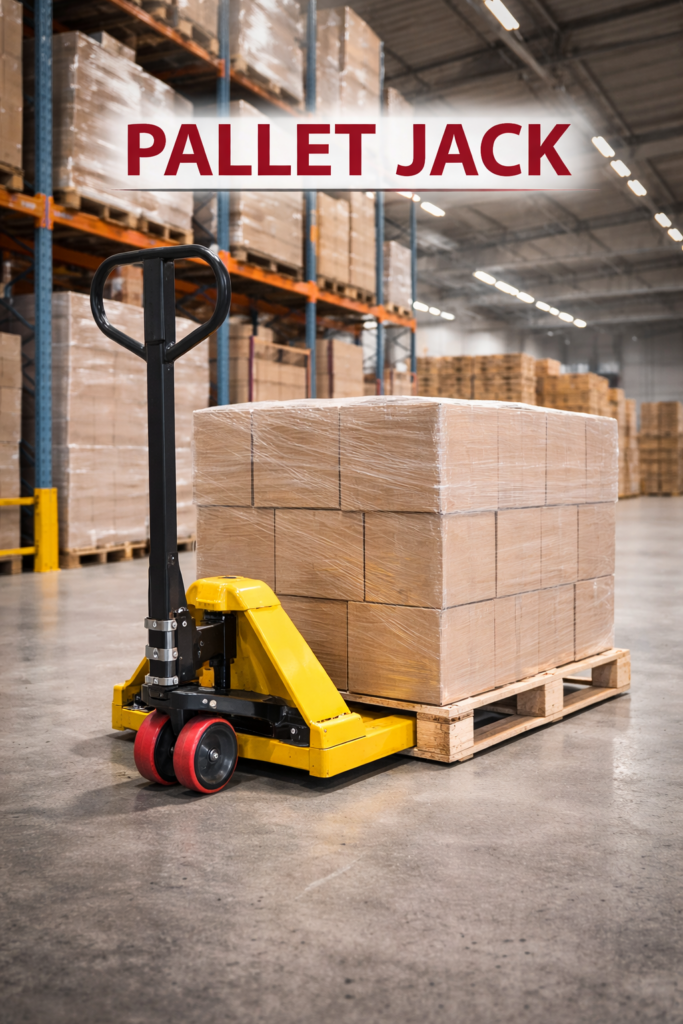
A pallet jack is used to lift and move pallets, available in both manual and electric versions. The manual pallet jack requires physical power to perform all operations, whereas the electrical jack makes use of a battery and motor for lifting and driving.
In this blog, let’s discuss the difference between manual jacks and electric jacks and how to choose the right pallet jack for your industry.
Manual jack Vs electric jacks
Manual jacks are cheaper and simpler tools that require more manual effort. They are best suited for short distances, light moves in small spaces, or stockrooms. Electric jacks are expensive and require high maintenance and training to operate, but they enhance efficiency, reduce manual work, and are best suited for long-distance transport, heavy lifting in large facilities, or warehouses. Electric pallet jacks require charging and make use of motors for lifting and driving, allowing the movement of heavy loads without physical strain.
Manual pallet jack pros and cons
Pros
- The initial purchase price is significantly cheaper
- It has a few mechanical parts that are easy to maintain, and no battery or charging worries.
- Easy to maneuver in tight spaces
Cons
- It requires more physical strength and stamina to lift and move loads that may result in potential injury and fatigue.
- It consumes more time and energy and significantly reduces load transfer times as it is highly reliant on operator speed and may affect overall productivity.
- Not suitable for heavy loads, long-distance moving, or large facilities.
Electric pallet jack pros and cons
Pros
- Enhance productivity through battery-powered lift and drive functions, and also improve speed and efficiency.
- Avoids the risk of potential injury or physical strain through battery-powered and motor-assisted lifting and moving.
- Some of the advanced features, such as powered brakes and anti-rollback systems, provide effective control, especially on inclines.
- Able to handle heavy and large loads easily without operator strength.
Cons
- Higher initial cost and more expensive than manual jacks
- Requires periodic maintenance for batteries and motors.
- Need to operate in a facility with a power source for charging the battery
- Requires operator training for safe operation and to understand the functionalities of complex features.
Which is the right jack for your industry?
If you’re a small business owner and looking to move lighter goods within a small workplace, a manual jack is the right option. They are budget-friendly, low-maintenance, and suitable for short-distance moves with manual effort.
If you want to lift and move heavier loads in larger facilities or warehouses, an electric jack is the ideal choice. It is suitable for high-volume operations, reduces physical strain, and ensures worker safety. You can perform frequent trips and long-distance moves without much manual effort.
To learn more about the pallet jacks and to choose the right one for your industry, talk to our experts today.
If you are looking to buy a new or used forklift for your workplace, you’re in the right place. Large lift trucks offer a range of forklifts from all leading brands that meet your specific purpose. We also provide forklifts for short-term or long-term rentals in Houston, Texas. Talk to our expert today and select the right forklift for your applications.
Pallet Jack FAQs
What is a pallet jack?
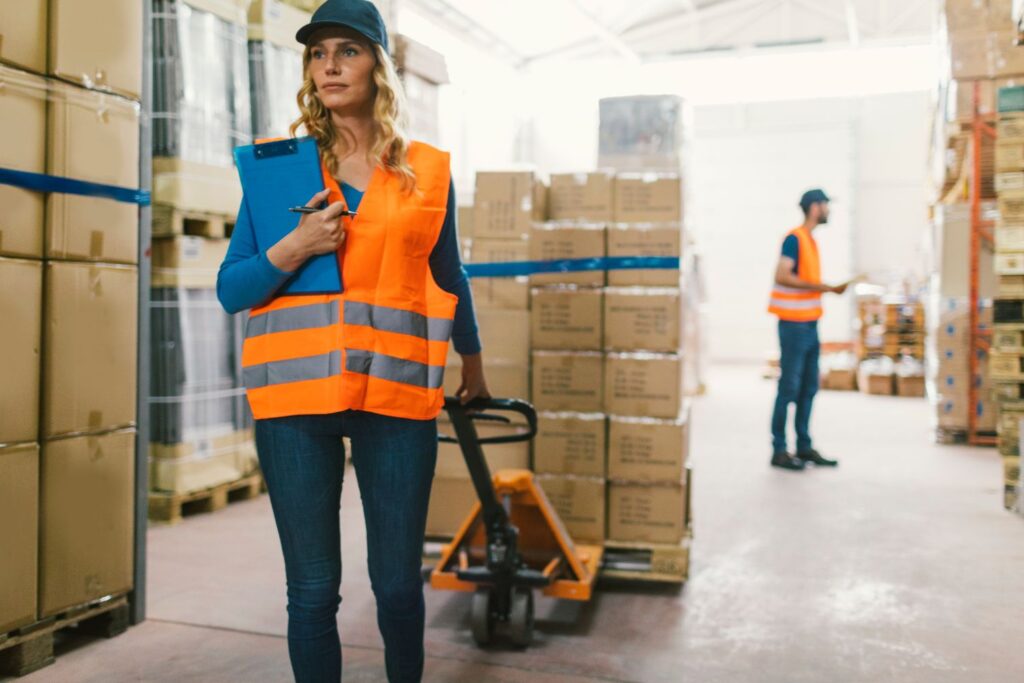
A pallet jack is used to lift and move pallets, available in both manual and electric versions. The manual pallet jack requires physical power to perform all operations, whereas the electrical jack makes use of a battery and motor for lifting and driving.
What is the difference between a manual and an electric jack?
Manual jacks are cheaper and simpler tools that require more manual effort. They are best suited for short distances, light moves in small spaces, or stockrooms. Electric jacks are expensive and require high maintenance and training to operate, but they enhance efficiency, reduce manual work, and are best suited for long-distance transport, heavy lifting in large facilities, or warehouses.
Which is the right jack for your industry?
If you’re a small business owner and looking to move lighter goods within a small workplace, a manual jack is the right option. If you want to lift and move heavier loads in larger facilities or warehouses, an electric jack is the ideal choice.